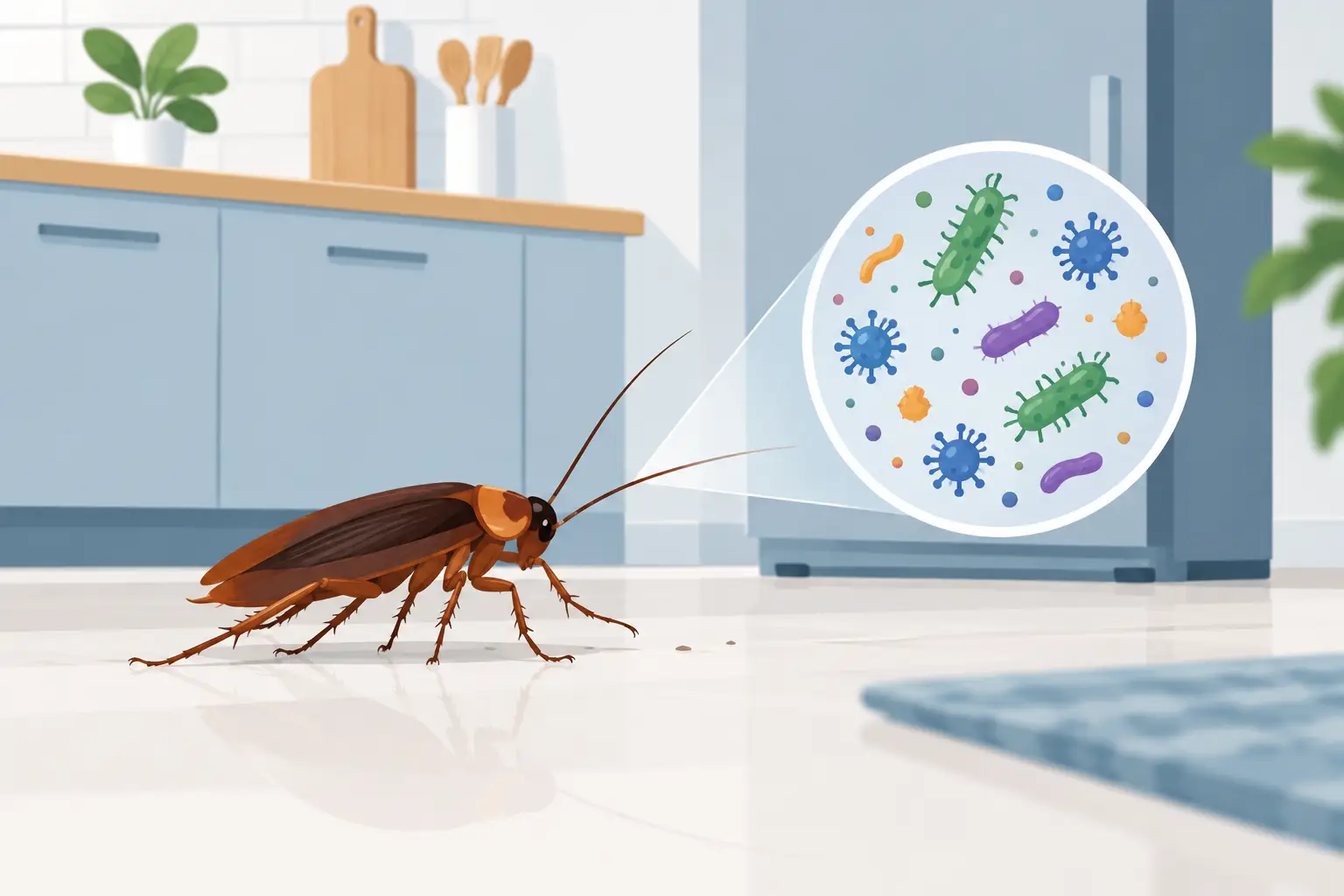
A cockroach crossing your kitchen bench is not just an unpleasant sight. It may have travelled through a drain, rubbish area, wall cavity or sewer-connected space before reaching the same surfaces used for food preparation. So, do cockroaches spread bacteria? Yes. They can carry and transfer bacteria and other contaminants from unsanitary areas to food, utensils, benchtops and equipment.
That does not mean every cockroach sighting will make someone sick. The level of risk depends on where the cockroaches have been, the size of the infestation, the cleanliness of the premises and whether food or high-touch surfaces have been contaminated. But in homes, cafés, strata buildings, warehouses and commercial kitchens, it is a problem worth dealing with promptly.
How cockroaches spread bacteria
Cockroaches are scavengers. They feed in places people work hard to keep separate from food: drains, bins, grease traps, leaking pipes, pet bowls, rubbish rooms and sewer-adjacent spaces. As they move, bacteria can cling to their legs, body and mouthparts. A cockroach can then deposit contamination on another surface simply by walking across it.
They can also contaminate an area through droppings, shed skins, saliva and regurgitated food. This is particularly concerning around uncovered food, food-storage shelves, kitchen drawers, dish racks and appliances. Roaches are mostly active at night, so contamination can occur while a property appears quiet and clean.
Research has found cockroaches may carry a range of bacteria, including organisms associated with food poisoning and gastrointestinal illness. They are generally considered mechanical carriers. In plain terms, they pick up germs in one place and move them elsewhere, rather than necessarily being the place where the bacteria multiply.
Why kitchens and food businesses face greater risk
A cockroach infestation in a bedroom or garage still needs attention, but the immediate hygiene concern rises sharply in areas where food is prepared, stored or served. A single active German cockroach population can multiply quickly around warmth, moisture and easy food access. Behind a fridge, under a dishwasher or inside a cupboard near plumbing can provide all three.
For Sydney food businesses, cockroach activity can create problems beyond customer confidence. Droppings, live insects and contamination risks can compromise hygiene standards, interrupt operations and lead to difficult conversations during an inspection. Commercial premises also tend to have more entry points, deliveries, waste handling areas and shared services than a typical home, which makes a quick surface spray a poor long-term answer.
At home, young children, older people and anyone with a compromised immune system may be more vulnerable to the effects of contaminated food. Cockroach allergens from droppings, saliva and shed skins can also aggravate asthma and allergy symptoms in sensitive people. These are separate concerns, but they often occur together when roach numbers are allowed to build.
Signs the problem is more than an occasional visitor
Seeing one cockroach does not always confirm a large infestation. Larger outdoor species can wander indoors during hot weather, rain or after garden disturbance. Even so, a cockroach in a kitchen should not be ignored, especially if it appears during the day.
Daytime sightings often suggest crowding in the hiding areas, though this is not an absolute rule. Small light-brown roaches, especially German cockroaches, are more likely to indicate an indoor breeding population. Look for pepper-like droppings in cupboard corners, under appliances and near hinges; egg cases; shed skins; a stale, musty odour; or repeated activity around plumbing and electrical appliances.
In apartments, the source may not be limited to one unit. Cockroaches can travel through wall voids, service penetrations, shared pipework and rubbish rooms. Treating only the roaches visible inside one kitchen may bring short relief while the wider access issue remains.
What to do if cockroaches have been near food
If you find cockroaches in a pantry, cupboard or food-preparation area, act cautiously. Throw out food that is uncovered, damaged or stored in packaging that roaches can enter. Wipe and disinfect hard surfaces, then wash food-contact items such as dishes, utensils and containers before using them again.
Do not rely on a strong-smelling spray around benches, plates or pantry shelves. Spraying can push cockroaches further into wall cavities and may not reach nests, egg cases or the hidden harbourages sustaining the infestation. It can also be unsuitable around food areas when applied without the right assessment and instructions.
Start by removing what supports roach activity. Keep food in sealed containers, clean crumbs and grease from appliances, empty indoor rubbish regularly, avoid leaving pet food out overnight and fix leaking taps or pipes. These steps reduce pressure on the property, but they cannot always solve an established infestation on their own.
Why professional treatment targets the source
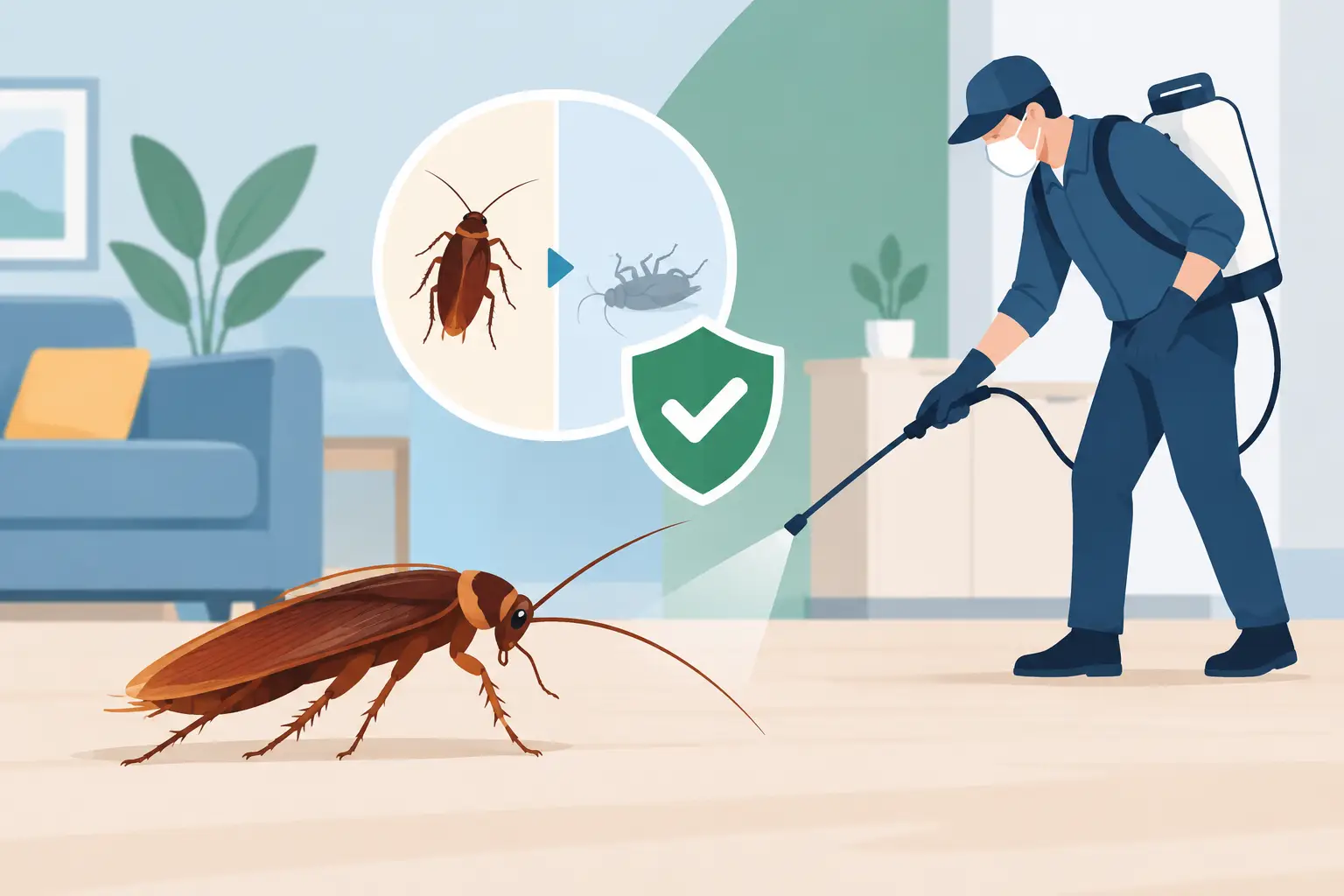
Cockroach control works best when it follows a clear process: inspection, a tailored plan, targeted treatment and ongoing protection where needed. The goal is not just to kill the roach that runs across the floor. It is to identify where they are feeding, breeding and entering the property.
A licensed technician will inspect likely harbourages such as kitchen cabinetry, fridge motors, plumbing voids, switchboard areas, bathroom cabinets, storerooms and external entry points. The treatment method depends on the species, the level of activity, the layout of the premises and whether children, pets, food handling or sensitive equipment are present.
Professional programmes commonly use carefully placed baits, insect growth regulators, targeted residual treatments and exclusion recommendations. Baits are often highly effective for indoor cockroaches because roaches carry the active material back to hidden harbourages. However, results take time and depend on correct placement, sanitation and reducing competing food sources.
For businesses and multi-unit properties, follow-up inspections are often essential. Cockroach eggs may hatch after the first visit, and new activity can appear through shared areas or incoming stock. A protection plan allows treatment to be adjusted based on what is actually happening onsite rather than assuming one visit has solved every cause.
Keeping cockroaches out after treatment
Prevention is most reliable when everyday cleaning and building maintenance support the treatment. Focus on the conditions cockroaches need: food, water, warmth and access. Pay attention to the narrow gaps behind appliances and below sinks, not just the visible floor area.
Seal gaps around pipes, repair leaking plumbing, fit door seals where appropriate and keep cardboard boxes to a minimum in kitchens and storerooms. Cardboard offers shelter and is a common way pests are brought into commercial premises through deliveries. Outdoor bins should have secure lids, and rubbish areas should be cleaned often enough to prevent food residue from building up.
If you live in a unit, report recurring activity to the property manager or strata contact. A coordinated response may be needed in shared rubbish rooms, plant areas, common corridors or neighbouring units. The same principle applies to commercial complexes, where one untreated tenancy can affect nearby premises.
When to book an inspection
Book a professional inspection if you see roaches repeatedly, find droppings or egg cases, spot small roaches in kitchens or bathrooms, or notice activity during the day. Do not wait for the numbers to become obvious. Cockroaches are skilled at staying hidden, and what is visible is often only a fraction of the population.
Ready Pest Control can assess the source of cockroach activity and provide a treatment plan suited to your Sydney home, apartment, workplace or industrial site. Treatments can be planned with family, pets, food-handling requirements and ongoing prevention in mind.
A clean-looking property can still have cockroaches hiding where heat, moisture and food residue meet. Acting early protects more than your comfort – it helps keep the spaces where people cook, eat, work and live properly hygienic.