Those tiny, fuzzy flies resting on bathroom tiles or hovering near the kitchen sink are not usually coming from outside. To stop drain flies breeding, you need to remove the wet organic film inside or around a drain where their larvae develop. Swatting the adults may make the room feel better for a day, but it does not deal with the source.
Drain flies are common in Sydney homes, apartments, cafés, offices and commercial washrooms because they need very little space to breed. A slow drain, rarely used floor waste, leaking pipe or dirty overflow channel can provide enough moisture and build-up for a recurring problem.
Why drain flies keep returning
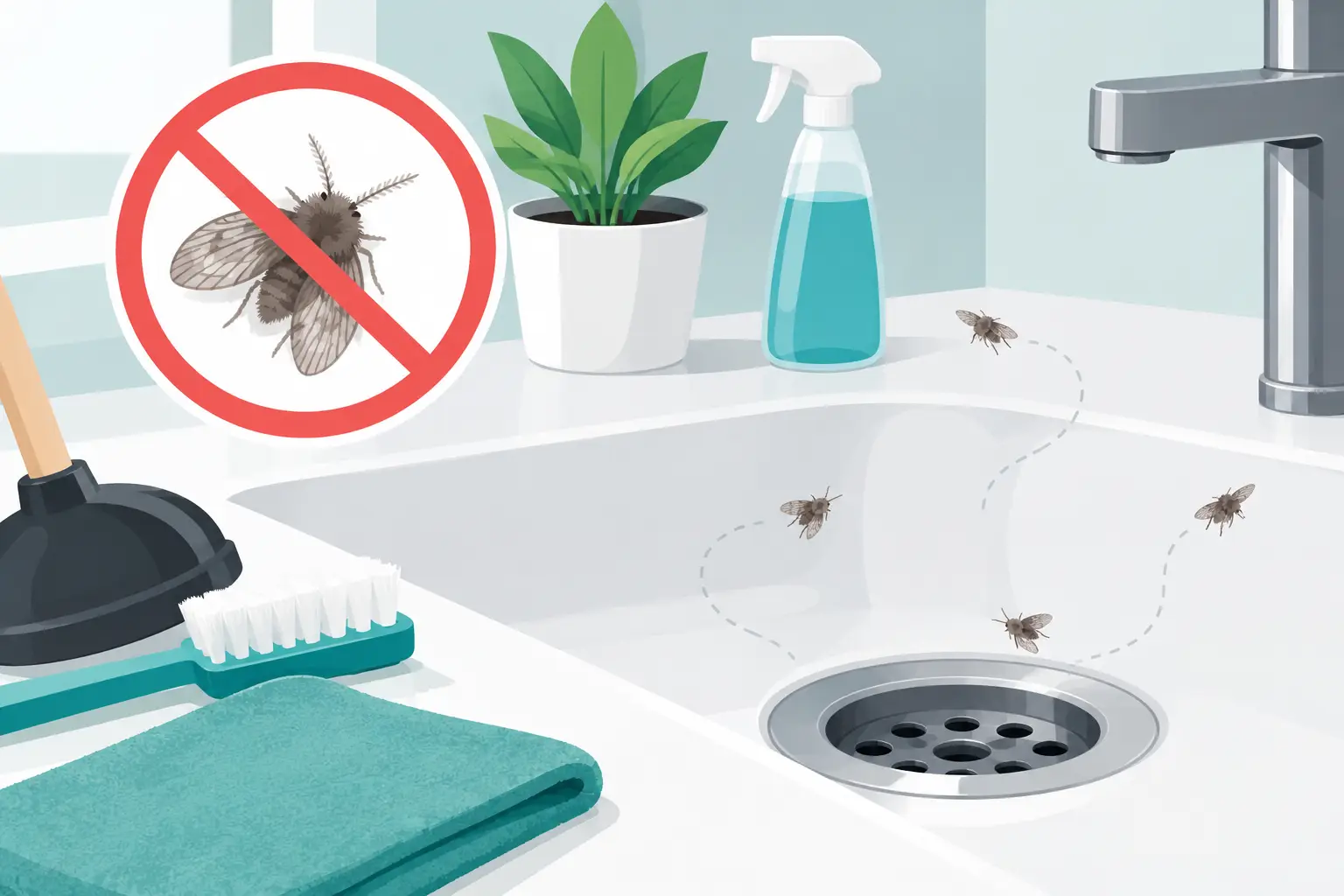
Drain flies, also called moth flies, are small grey or brown insects with broad, hairy wings. They lay eggs in the sludge-like layer that can form inside drains, pipes, traps and other damp areas. This layer is made up of soap residue, hair, food particles, grease, scale and bacteria. It is the larvae’s food source.
That is why a quick flush with hot water or a surface spray rarely solves the issue. Water passes through the pipe, while the breeding material stays stuck to the sides. Adult flies can emerge within days, so an untreated drain may appear to be getting worse even after you have cleaned the basin.
Not every small fly is a drain fly. Fruit flies tend to gather around ripening produce, bins and recycling, while fungus gnats are often linked to damp pot plants. Drain flies usually sit close to sinks, showers, floor drains, laundries or sewer access points. Correct identification matters because the treatment source is different.
Find the breeding source before treating
Start with the rooms where you see the most flies. Check sink and shower drains, bathroom floor wastes, laundry troughs, dishwasher connections, air-conditioning drainage lines and seldom-used bathrooms. In commercial premises, inspect staff amenities, bar drains, kitchen floor drains, grease-management areas and wash bays.
A simple overnight test can help confirm a suspected drain. Place clear tape loosely across the drain opening, leaving a small gap for air flow and avoiding a full seal. If adult flies collect beneath or around the tape by morning, the drain is likely contributing to the problem. Remove the tape before using the fixture.
Also look beyond the visible drain. Water collecting under a fridge, a leaking pipe beneath a vanity, a blocked gutter near an entry point or a damp subfloor can support fly breeding. If flies are appearing from several rooms at once, a concealed plumbing fault or sewer issue becomes more likely.
How to stop drain flies breeding in the drain
The most reliable home treatment combines physical cleaning with a product designed to break down organic build-up. Start by removing the drain cover, if it can be safely lifted, and clear away hair, food scraps and visible debris. Wear gloves and take care around sharp metal edges.
Use a narrow drain brush or flexible cleaning tool to scrub the inside walls of the drain, the drain cover and the accessible section of pipe. In basins, do not forget the overflow opening near the top of the bowl. In showers and floor wastes, clean under the grate and around the trap where residue often collects.
After scrubbing, apply an enzyme or biological drain cleaner according to the label directions. These products are intended to digest organic material rather than simply push it further down the pipe. They can be particularly useful where grease, soap scum or food waste has built up over time. Treatments often need to be repeated over several nights because one application may not remove every layer of residue.
Flush only as directed on the product label. Very hot water can assist with some household cleaning, but it is not a stand-alone treatment and may not suit every pipe material or plumbing setup. Avoid relying on harsh chemical drain openers unless a plumber recommends them. They can damage some pipes, create hazardous fumes and may not remove the slime layer where drain fly larvae live.
Never mix bleach, acids, ammonia or different drain chemicals. This can create dangerous gases. Insecticide sprayed into a drain is also not the answer. It may kill a few exposed adults, but it does not remove the breeding material and is not an appropriate way to treat plumbing.
Do not overlook dry and unused drains
A floor drain that is rarely used can become a drain fly hotspot. The water in its trap may evaporate, allowing odours and insects to move through more easily, while dust and organic matter gather around the opening. Run water into unused drains regularly and keep the area clean.
The same applies to holiday homes, vacant tenancies, spare bathrooms and commercial areas closed for part of the week. A simple maintenance routine can prevent an unpleasant surprise when the space is used again.
In kitchens, keep food scraps out of the sink, clean the sink strainer and empty rubbish regularly. In bathrooms, remove hair from shower drains and wipe away soap residue. These small habits reduce the material that supports breeding.
When the issue is more than a dirty drain
If you have cleaned the suspected drains thoroughly and adults are still appearing after a week or two, it is time to investigate further. Persistent drain flies can point to a cracked pipe, blocked drain, failed seal, leaking waste line or build-up in a section of plumbing you cannot reach.
Pay attention to warning signs such as sewage smells, slow drainage, gurgling pipes, damp patches, water damage or flies emerging from wall gaps and cupboards. These issues need a proper inspection, and a licensed plumber may be required where plumbing repairs are involved.
For businesses, recurring flies near food preparation, customer bathrooms or staff facilities should be addressed promptly. Even a minor fly issue can affect hygiene standards and customer confidence. Regular cleaning helps, but high-use drains often benefit from a scheduled maintenance plan that targets the source before adults become visible.
Why adult fly sprays have limited value
A fly spray or sticky trap can reduce the number of adults you see, especially during the first few days of treatment. This can be useful for monitoring progress and making a room more comfortable. However, it is only a supporting measure.
Drain fly larvae are protected inside the drain film. Unless that film is scrubbed away and the moisture issue is corrected, new adults will continue to emerge. Think of adult control as tidying up the symptom while drain cleaning removes the cause.
A practical prevention routine
Once the active problem is under control, keep prevention simple and consistent. Clean high-use drains weekly, particularly kitchen sinks, showers and commercial floor wastes. Remove hair and food debris before it travels into the pipe, and use a suitable biological cleaner as part of routine maintenance where build-up is common.
Check for leaks under sinks and around appliances, especially after moving items or completing renovations. Keep floor drains clear, use water in infrequently used fixtures and arrange repairs promptly when a drain is slow or damaged. In strata buildings and commercial sites, report recurring issues early, as the source may sit in shared plumbing rather than within one tenancy.
Ready Pest Control approaches recurring fly activity by inspecting the likely breeding areas first, then recommending treatment and prevention measures suited to the property. Where the evidence points to a plumbing fault, identifying that early helps avoid repeated treatments that only manage the visible flies.
When to arrange professional help
Professional pest management is worthwhile when the source is unclear, flies continue after careful cleaning, or the infestation is affecting a sensitive area such as a food business, healthcare setting or childcare facility. A trained technician can assess likely harbourage points, distinguish drain flies from other small flies and advise whether pest treatment, cleaning, plumbing work or a combination is needed.
For homes with children and pets, ask how treatment is applied, what preparation is required and what areas should be avoided during service. A clear plan should focus on the breeding source and include practical advice for preventing a repeat problem.
The quickest way to get control is not to chase every flying insect around the room. Clean the damp build-up they depend on, correct any leak or drainage fault, and keep an eye on the problem for the next two weeks. When the source is gone, the flies have nowhere useful to return to.