A cockroach running across the kitchen bench can make a spray can feel like the fastest answer. But cockroach gel versus spray is not simply a question of which product kills on contact. The better option depends on where the roaches are hiding, how established the infestation is, and whether you need to protect children, pets, customers or staff.
For many Sydney homes and businesses, a visible cockroach is only the activity you can see. German cockroaches, in particular, tend to shelter in warm, tight spaces around fridges, dishwashers, cupboards, motors and plumbing. Effective control means reaching the harbourage areas and interrupting the breeding cycle, not just dealing with the insects out in the open.
Cockroach Gel Versus Spray: The Key Difference
Gel bait and insecticide spray work in very different ways. Gel is designed to be eaten by cockroaches, while spray either kills on direct contact or leaves a treated surface that may kill roaches as they move across it.
How cockroach gel works
Cockroach gel is placed in small, discreet dots close to likely hiding places and travel routes. Roaches feed on the bait and return to their harbourage areas. Depending on the product and species, this can help affect cockroaches that have not directly encountered the bait, including those deeper in the infestation.
This targeted approach is a major advantage in kitchens, pantries, bathrooms, electrical areas and tight cabinetry. Gel does not need to be sprayed across broad surfaces, and a professional technician can apply it precisely where cockroaches are active while keeping it inaccessible to children and pets.
Gel is not instant. You may still see activity for several days as cockroaches feed and move through their normal routes. That can be unsettling, but it is often part of the treatment process. The bait needs to remain attractive, dry and available long enough for foraging roaches to find it.
How cockroach spray works
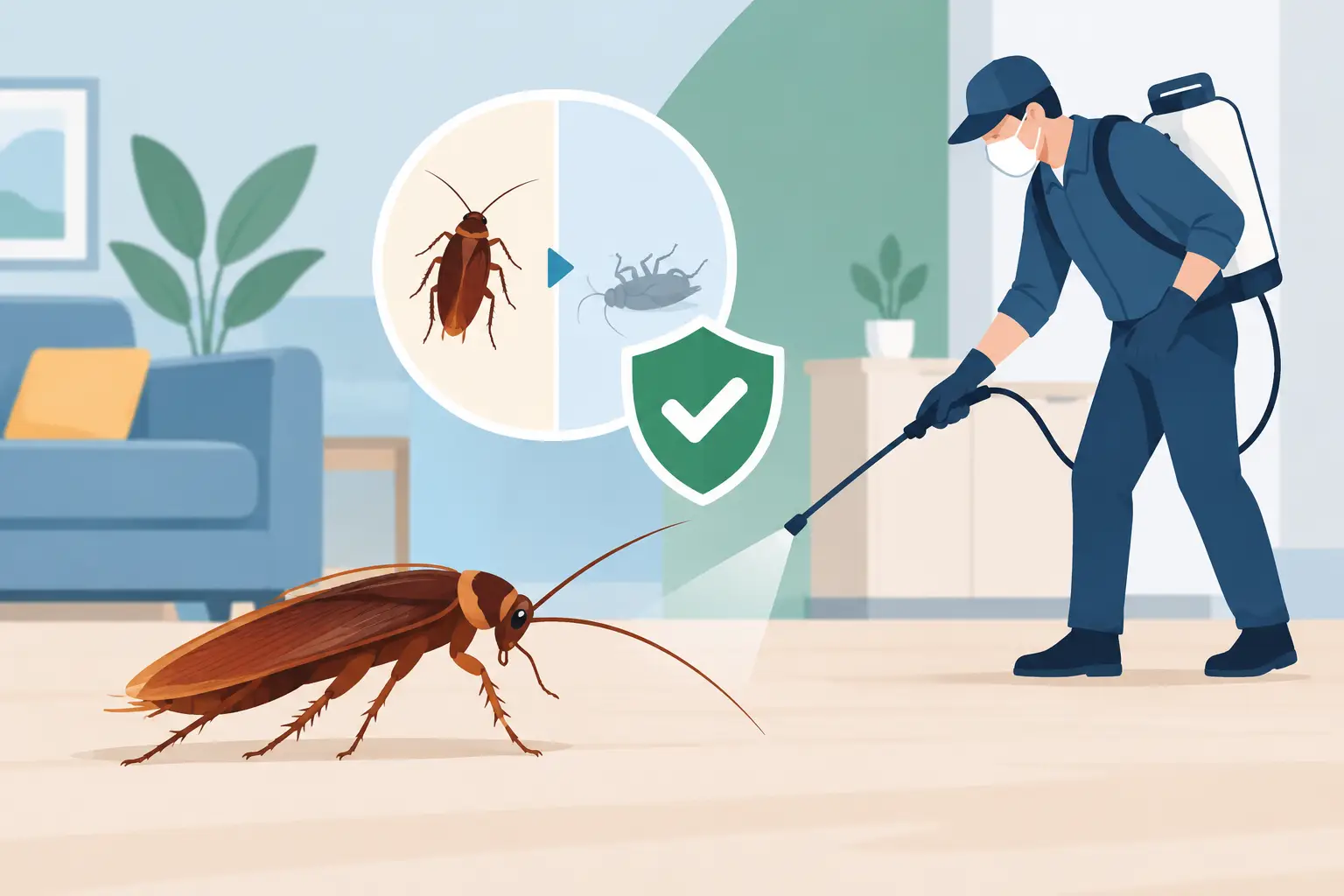
Sprays can provide an immediate knockdown when a cockroach is exposed directly. Residual sprays may also provide a protective barrier on suitable surfaces, helping to control roaches as they travel through treated zones.
Spray has a useful place in a broader treatment plan, particularly for cracks, voids, external entry points, subfloors, garages and areas where a barrier treatment is appropriate. It can also assist with larger cockroach species, such as American or Australian cockroaches, that enter from drains, gardens, roof voids or outside harbourage areas.
The limitation is that spray can miss the core of an indoor infestation. Cockroaches are skilled at avoiding disturbed areas. If a spray only reaches exposed roaches, the egg cases, nymphs and hidden adults may remain behind. Some repellent products can even cause roaches to scatter further into wall voids or adjoining cupboards.
Which Option Is Best for Your Property?
For a small number of cockroaches entering from outside, a carefully applied residual treatment around likely entry points may be highly effective. If you are finding roaches repeatedly in the kitchen at night, seeing small German cockroaches, or spotting droppings in cupboards, gel bait is often the more strategic starting point.
The strongest results frequently come from using both methods in the right places. Gel can target feeding activity near indoor harbourages, while a non-repellent residual treatment can protect selected cracks, external perimeters and access points. The treatment should be based on an inspection, not a one-size-fits-all response.
For apartment residents, the answer may also depend on neighbouring units, shared plumbing lines and rubbish areas. Treating one kitchen can reduce activity, but ongoing pressure from nearby harbourages may require coordinated management with the building manager or strata.
Why Spray Alone Can Fall Short
A supermarket spray can kill the cockroach you see. It does not necessarily solve why that cockroach was there. Repeatedly spraying around benches, cupboards and appliances can leave the infestation largely untouched while creating unnecessary exposure on household surfaces.
Spray-only treatment is especially likely to disappoint when food, moisture and warmth are readily available. A leaking pipe beneath the sink, crumbs behind an oven, pet food left overnight or grease around cooking equipment can keep cockroaches active even after an initial treatment.
There is also the issue of product placement. Spraying over gel bait can make the bait less appealing or contaminate areas where roaches would otherwise feed. Different products must be selected and applied carefully, following their labels and according to the conditions on site.
Safety Around Children, Pets and Food Areas
Both gel and spray products need sensible handling. The safest treatment is not defined by a single product type. It comes down to using approved products, placing them correctly, applying only what is needed, and giving occupants clear preparation and aftercare advice.
With gel, the key concern is keeping bait out of reach. It should be placed in concealed cracks, behind appliances, inside inaccessible cabinet voids or other suitable harbourage zones. Do not apply gel to food-preparation surfaces, and do not leave open bait where a child or pet can reach it.
With sprays, avoid treating food, utensils, benches and children’s toys unless a product label specifically allows it and the required directions are followed. Kitchen items may need to be stored away before treatment, and treated areas should remain undisturbed until they are dry or until your technician advises otherwise.
A licensed pest professional can assess the site, select suitable low-toxicity options where appropriate, and explain exactly what your household or workplace needs to do before and after treatment. That matters in childcare settings, cafés, offices, warehouses, medical environments and homes with young children or animals.
What a Proper Cockroach Treatment Should Include
Long-lasting cockroach control starts with finding the source. An inspection should look beyond the obvious areas to check appliances, plumbing penetrations, cupboard hinges, drains, roof and subfloor access, rubbish storage, external doors and cracks around services.
At Ready Pest Control, treatment planning is built around the conditions found at the property. This may include targeted gel baiting, carefully selected residual applications, treatment of entry points and practical advice to remove food and moisture sources. Follow-up protection is particularly valuable for established German cockroach activity, because eggs may hatch after the first visit.
Preparation also plays a real role. Before treatment, clear excessive clutter from under sinks and around appliances where practical. Store pantry foods in sealed containers, wipe down grease and crumbs, empty indoor rubbish regularly and repair leaks. These steps do not replace professional treatment, but they make baiting and residual control more effective.
When to Book Professional Help
Do not wait for a major infestation if you are seeing small cockroaches during the day, finding droppings that resemble ground pepper, noticing a musty odour, or discovering egg cases in cupboards. Daytime sightings can indicate overcrowding in the harbourage areas.
Businesses should act quickly at the first sign of cockroach activity. In food service, healthcare, retail, warehouses and offices, cockroaches can create hygiene concerns, staff distress and reputational risk. A documented treatment and prevention plan helps protect the premises rather than relying on reactive spraying between sightings.
If you have already used spray several times and roaches keep returning, the problem is unlikely to be solved by applying more product. A targeted inspection can identify where they are breeding, what is attracting them and which treatment method is most likely to deliver control.
The practical choice between gel and spray is rarely about choosing a winner from the shelf. It is about using the right treatment in the right location, then removing the conditions that let cockroaches settle in. Acting early gives you the best chance of keeping a small problem from taking over your home or business.